
Choctaw County Warrant Search Availability
No official Choctaw County online warrant search or active-warrant list was located. That is the key finding, and it shapes every step that follows. Warrants here are issued by judges across several courts. A Justice Court judge can sign arrest warrants and bench warrants. Circuit Court can issue a capias in a felony case. Municipal Court can issue a city bench warrant after a missed court date.
Because there is no public database, a warrant does not simply appear online for anyone to read. Some entries may sit inside the court case system, but that system is paid and login-gated. The most reliable path is to ask the office that would hold the warrant. The channels below cover every realistic option, from the Sheriff to the lower courts to Circuit Court.
All of these courts sit close to home. Circuit Court and the Circuit Clerk work out of the Choctaw County Courthouse at 22 E. Quinn Street in Ackerman, and the Circuit Clerk, Amy Burdine, can be reached at 662-285-6245. Justice Court handles the bulk of county warrant activity, while each city court handles its own. The Sheriff, Brandon Busby, runs the office that serves and clears most local arrest warrants.
How to Find Choctaw County Warrants
A real warrant check runs through people and offices, not a search box. The Sheriff is the first local stop for an active arrest warrant or a jail hold. The court named on a citation or a case is the stop for a bench warrant. The table lays out the main channels and what each one needs to give you an answer.
| Channel | Search Input | Required | Notes |
|---|---|---|---|
| Sheriff phone / app | Full name; DOB; possible address | Practical yes | Best local first step for active arrest warrants or jail holds. |
| Justice Court | Name; citation or case number; DOB | Practical yes | Bench warrants for missed county court or traffic. |
| Municipal Court | Name; ticket or case number | Practical yes | City warrants and failure-to-appear tied to city citations. |
| Circuit Court / PAMEC | Party name or case number after login | Login required | Felony docket and capias entries if public and non-restricted. |
The Choctaw County Sheriff MS app adds a direct line to the office. It accepts tips and crime reports and carries public safety news and jail information. Treat it as a communication and jail-information channel, since no in-app warrant lookup has been confirmed.
A public-records request is the formal fallback. A focused request to the Sheriff or the issuing court, naming the person and any case number, can pull non-confidential warrant or arrest information. Sealed warrants and active investigative files can still be withheld. State custody runs on a separate system, so probation and parole holds tied to MDOC or the Parole Board are not part of a county warrant search, and MDOC is the right office for a sentenced or supervised person.
Types of Warrants in Choctaw County
Not every warrant means the same thing. The type tells you which court issued it and why it exists. A few of them show up far more often than the rest in a county this size.
- Arrest warrant - signed when a judge finds probable cause to take a person into custody.
- Bench warrant - issued by a judge, often after a failure to appear or a missed payment.
- Capias - a court order for custody, common after an indictment or a missed felony setting.
- Search warrant - allows a search of a place or person, and it is usually sealed before it is served.
- Fugitive or extradition warrant - involves another state or county and a hold for transfer.
- Probation or parole hold - tied to MDOC or the Parole Board after a local arrest.
Note: A bench warrant for a missed court date can often be cleared by contacting the issuing court before any arrest is made.
Bench Warrants in Choctaw County Courts
Most local warrants start in the lower courts. Justice Court handles county misdemeanors, traffic, initial appearances, bond, and county warrants. It is where a failure to appear on a county citation usually turns into a bench warrant.
The Mississippi Judiciary explains this court's role on its Mississippi Justice Court overview.
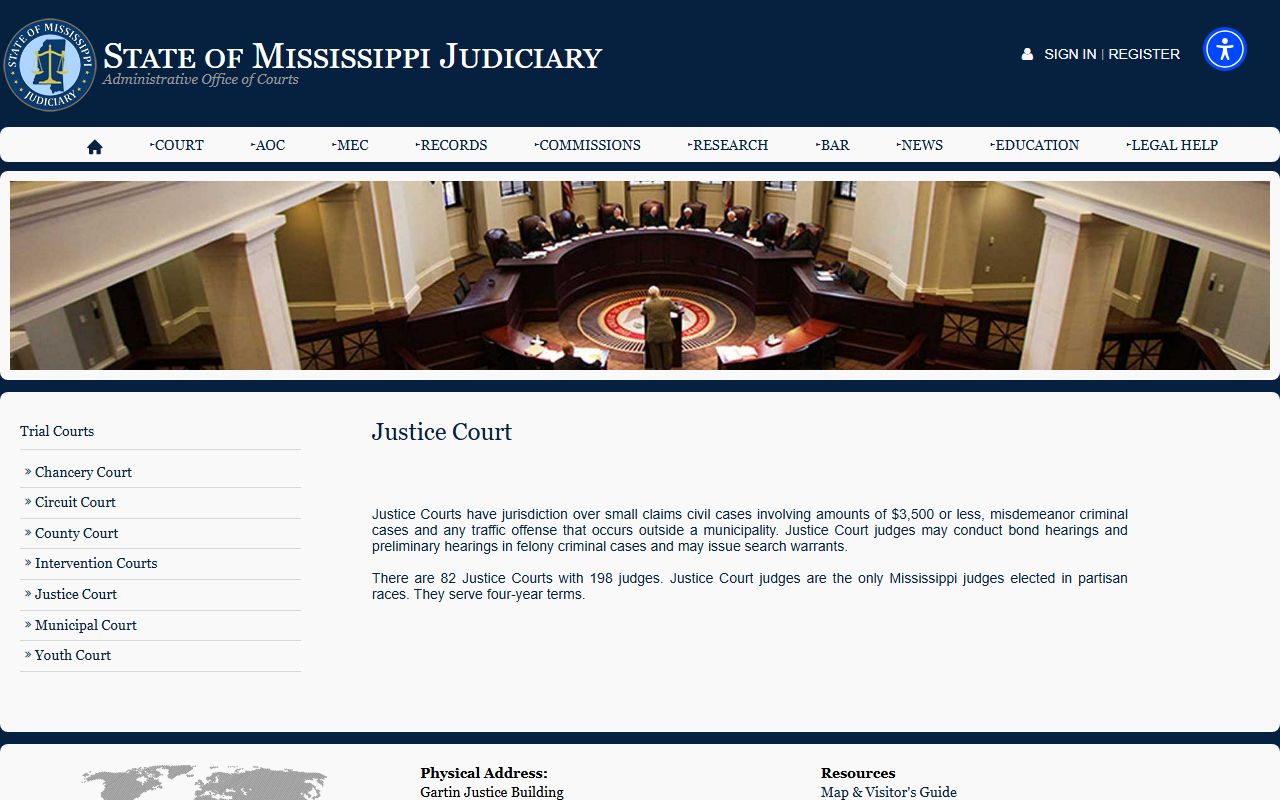
No standalone Choctaw County Justice Court search page was located, so a county warrant is confirmed by phone rather than online. Justice Court judges also sign arrest warrants, set bond, and hold preliminary hearings in felony cases, so the same court touches a case early and often. No direct Justice Court phone line was published in official sources for the county, which leaves the courthouse and the Sheriff as the practical contacts.
City citations follow a different track. Municipal Court handles city tickets and ordinance cases, and it issues a city bench warrant when someone misses a city court date. The court named on the ticket is the one to call.
The statewide Mississippi Municipal Court overview describes how these city courts work.
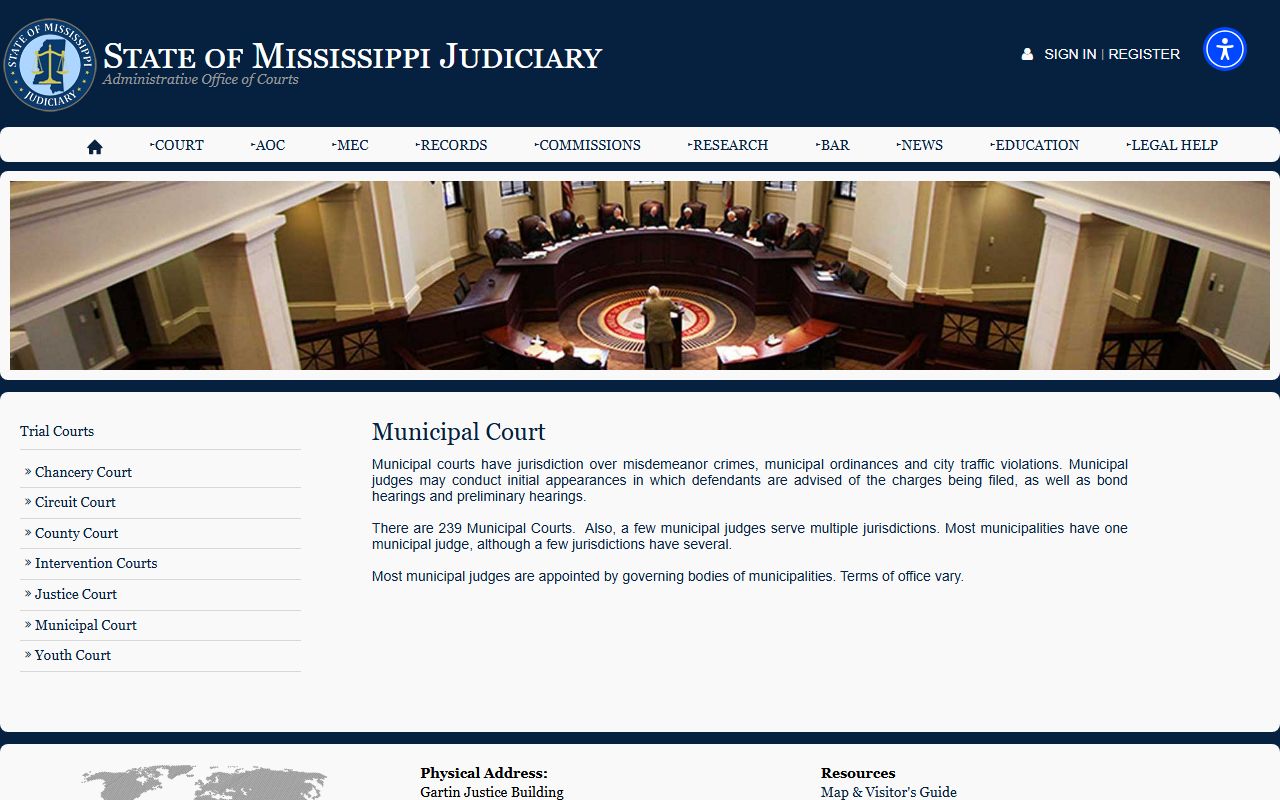
In Choctaw County, incorporated towns include Ackerman, French Camp, Weir, and part of Mathiston, so the issuing city matters when a city warrant is involved.
Choctaw County Circuit Court Capias Records
Felony warrants run on a higher track. After an indictment or a missed felony setting, Circuit Court can issue a capias, which is a court order to take a person into custody. Bond orders and capias entries may appear in Circuit Court case records, which run through the Fifth Circuit on Mississippi Electronic Courts.
Reaching those entries is not free or anonymous. The public-access side, PAMEC, requires registration and payment, and some documents stay restricted. PAMEC charges a $10 yearly registration and $0.20 per result page, so it is built for case lookups, not casual warrant browsing. Choctaw County Circuit Court joined MEC on October 12, 2020, which is why recent felony entries are more likely to be online than older ones. A felony capias is best confirmed with counsel and the Circuit Clerk rather than guessed at from a partial record. The felony cases that lead to these warrants are detailed in the Choctaw County criminal court records.
After a Choctaw County Warrant Arrest
When a warrant leads to an arrest, the case moves quickly into its first stage. Justice Court usually holds the initial appearance, advises the person of the charge, and sets bond. A felony then heads toward Circuit Court and the District Attorney for the Fifth Circuit District.
People who cannot afford a lawyer can get help fast. The Fifth Circuit Day One public defender pilot, which covers Choctaw County, began taking felony cases on October 1, 2025, and aims to connect a person with counsel within 24 hours of arrest. That early help can affect bond and the first court date.
What a Choctaw County Warrant Record Shows
A warrant record carries a small set of core fields. No public Choctaw County warrant portal was available to inspect, so the list below reflects the fields a warrant typically holds. Ask for these by name when you call the issuing office.
| Field | What It Shows |
|---|---|
| Warrant Number | The unique number the court or agency assigns to the warrant. |
| Issue Date | The date a judge signed the warrant. |
| Charge | The offense or reason behind the warrant. |
| Bond Amount | The amount, if any, set for release. |
| Issuing Court | The court that signed it, such as Justice, Municipal, or Circuit. |
A jail hold tied to a warrant shows up on the booking side instead. The county booking status and holds are covered on the Choctaw County inmate records page.
What to Do About an Outstanding Warrant
An outstanding warrant does not fix itself, and ignoring it tends to make things worse. A missed court date can grow into an arrest at a traffic stop or a routine contact. A clear, calm plan works better than a guess, and the right call early can keep a small matter small. The steps below follow the safest order for a person who thinks a warrant may exist.
- Do not rely on a third-party database. Confirm the warrant with the Sheriff or the issuing court.
- Find out which court issued it, whether county, city, Circuit, or another state.
- Ask whether bond has been set and which payment methods are accepted.
- Ask whether a new court date can be set or whether you must surrender and be booked.
- For traffic or misdemeanor failures to appear, call the Justice Court or Municipal Court on the paperwork.
- For a felony capias, contact a lawyer and the Circuit Clerk before acting.
- After it clears, request written proof and allow time for records to update.
Important: Talk to a lawyer before you turn yourself in, since counsel can arrange bond, set a court date, and protect your rights during booking.
Restricted Choctaw County Warrant Records
Not every warrant is open to the public. Search warrants are usually sealed until they are served, and some stay sealed after that to protect an investigation. Warrants tied to juveniles in Youth Court are confidential by rule. Federal warrants are handled by federal agencies and courts, not the county.
A request for warrant information can still be made through public-records channels, but sealed warrants and active investigative records can be withheld. A blank result is sometimes the rule at work, not a missing file. Out-of-county and out-of-state warrants add another layer, since the issuing jurisdiction controls the record and a local office may only see a hold or a hit, not the full file.
Note: Sealed and juvenile warrants will not appear through any public channel, so an empty result does not always mean no warrant exists.